It was, by any measure, an historic day for Reform UK in East Sussex. On Thursday 21 May, at the Annual General Meeting of the newly elected county council, Andy Woolley was voted Leader of East Sussex County Council – the first Reform UK leader in the council’s history. But the road to that moment was closer, more dramatic, and more dependent on the decisions of individual councillors than almost anyone in the chamber could have anticipated when the day began.
This is the story of how it happened.
First: electing the group’s own leadership
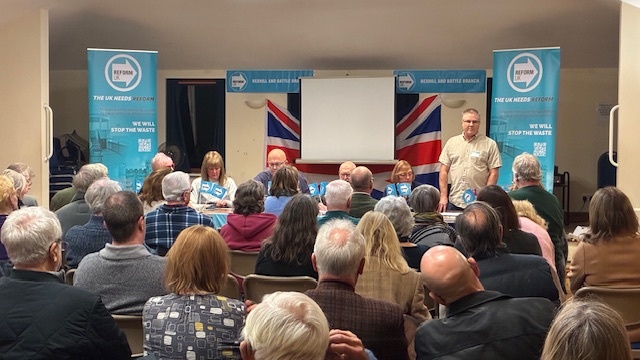
Before the AGM, there was important business to attend to within the Reform UK group itself. Following the election results from the 7th of May – in which Reform UK won 22 of East Sussex County Council’s 50 seats, making it the largest single group – the newly elected councillors met at County Hall for their first group meetings. They received their equipment, began their training, and elected the group’s own leadership team.
Andy Woolley, who had won the Heathfield and Mayfield division with 1,480 votes, was elected Reform UK Group Leader for East Sussex County Council. Pete Morley, who had won Bexhill West with 1,647 votes, was elected Deputy Group Leader. Paul Soane was elected Group Secretary. It was a deliberate, organised start. The group was not going to walk into the AGM unprepared.
THE NEW EAST SUSSEX COUNTY COUNCIL – MAY 2026
Reform UK: 22 seats
Liberal Democrats: 13 seats
Green Party: 11 seats
Conservative: 3 seats
Independent: 1 seat
Total: 50 seats. No party holds an overall majority. Overall turnout: 47.7%
Before the AGM: reaching out, not waiting
With 22 seats and no majority, forming an administration would require the support, or at minimum the acquiescence, of other groups. Some parties in that position might have waited to see what developed. Andy Woolley did not.
In the days after the election, Andy reached out personally to the leaders of every other group on the council – the Liberal Democrats, the Green Party, the Conservatives, and Independent councillor Stephen Sai Hung Shing. The message he carried into each of those conversations was consistent: Reform UK wanted to govern seriously, without point-scoring, and on the basis that good ideas are good ideas whatever party they come from.
It was a principled approach, and a transparent one. Reform UK was clear from the outset that it was not offering a formal coalition to any party. What it was offering was a willingness to work with every councillor in the chamber on their merits.
“We have not offered a coalition to any party, and we have not sought one. What we have done is reach out to every group on this council and make clear that we are willing to work with anyone, across every part of this chamber, on the basis of the quality of the idea – not the party it comes from. That is how we intend to govern.”
— Andy Woolley, Leader of East Sussex County Council
Those conversations also shaped how the group presented itself publicly in the days leading up to the AGM. The Reform UK group made clear that, if it was fortunate enough to gain the support of other parties, the administration it would form would be a steady one – no immediate headline-grabbing announcements, no knee-jerk decisions, and a thorough review of the inherited financial position before any changes to policy or service delivery were announced.
The AGM: a single vote that changed everything
The Annual General Meeting of a county council is, in most years, a routine procedural event. On 21 May 2026, it was anything but. Before committees, Cabinet positions, or lead member roles could be decided, the council first had to elect a Chairman. In the architecture of local government procedure, the Chairmanship matters enormously: in the event of a tied vote anywhere in the council’s business, it is the Chairman who holds the casting vote. With a 50-seat chamber, a minority administration, and no guaranteed majority on any single question, the identity of the Chairman was not a formality. It was potentially the difference between governing and not governing.
Complicating matters further: one of Reform UK’s 22 councillors had been called for jury service on the day of the AGM. The presiding judge did not excuse the absence. With 21 Reform UK votes available rather than 22, the arithmetic became extremely tight.
The position of Chairman was contested. It went to a named vote. Everything depended on the Conservatives and the Independent member supporting Martin Kenward for Chairman. They did. Martin Kenward was elected Chairman of East Sussex County Council – by a single vote.
“It is an honour to be elected Chairman of East Sussex County Council. I will do my utmost to ensure that every voice in this chamber – from every group – is heard and treated with dignity.”
— Martin Kenward, Chairman of East Sussex County Council
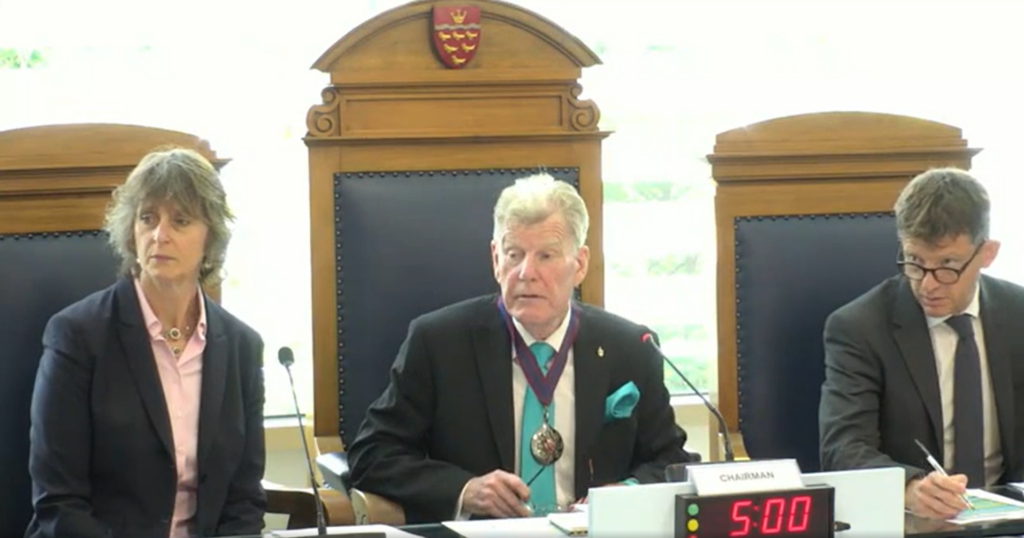
The Vice-Chairmanship came next, and it was equally contested. On this occasion, the Independent member who had voted for Martin Kenward abstained, creating a tied vote. It fell to the newly elected Chairman to exercise his casting vote. Martin Kenward cast that vote for Victoria Carson, Bexhill South. Victoria Carson was elected Vice-Chair of East Sussex County Council.
“Every resident of East Sussex deserves a council that listens to them and spends their money wisely. That is what we are here to do, and I am proud to play my part in making it happen.”
— Victoria Carson, Vice-Chair of East Sussex County Council
With a Reform UK Chairman and Vice-Chair in place, the council moved to the election of the Leader. Andy Woolley was duly elected Leader of East Sussex County Council – which in turn enabled Reform UK to appoint its Cabinet and take the Lead Member positions across the council’s key service portfolios. It was, as Victoria Carson wrote to branch members in the days that followed, an historic day for Reform UK in East Sussex.
Why the Independent member supported the new administration
In the days following the AGM, a number of residents asked Independent Councillor Stephen Shing why he had supported Andy Woolley in the vote for Council Leader. His explanation was detailed and worth reading in full.
“As an Independent councillor, my responsibility is to the residents who elected me, not to any political party. My decision was based solely on what I believe will allow me to represent local people most effectively and achieve the best outcomes for East Sussex. Prior to the leadership vote, I held discussions with Councillor Woolley regarding how Independent councillors could contribute to the work of the Council. Those discussions were constructive and focused on practical issues affecting residents and on ensuring the most effective use of the Council’s resources. An important consideration was committee representation. The initial committee allocation proposed for Independent councillors was a place on the Regulatory Committee, which meets infrequently, and the Pension Committee, which primarily deals with pension fund investments. While both committees perform important functions, they provide limited opportunities to address the day-to-day concerns raised by residents.
Following those discussions, Councillor Woolley agreed to support my appointment to the Place Scrutiny Committee and the People Scrutiny Committee. These committees play a vital role in scrutinising services that directly affect local communities, including highways, transport, planning, social care, health services, children’s services and other issues that matter most to residents. Membership of these committees provides a far stronger platform from which I can represent my constituents, scrutinise council decisions and hold the administration to account on behalf of local people. I would also note that neither the Liberal Democrat nor Green groups approached me regarding the formation of an alternative administration, nor was I invited to participate in discussions about how an Independent councillor could contribute to their proposed arrangements.”
— Councillor Stephen Shing, Independent
That final point is significant. The Liberal Democrats and Green Party, who between them hold 24 seats, did not approach the only Independent councillor on the council. Reform UK did. The result speaks for itself.
Andy Woolley: the new Leader of the Council
Andy Woolley brings to the role of Leader a combination of deep local knowledge and serious business experience. A Heathfield resident for 26 years, he served 16 years on his parish council including six as Chairman, and has had a 40-year career in the Insurance industry. He was elected to represent Heathfield and Mayfield with 1,480 votes.
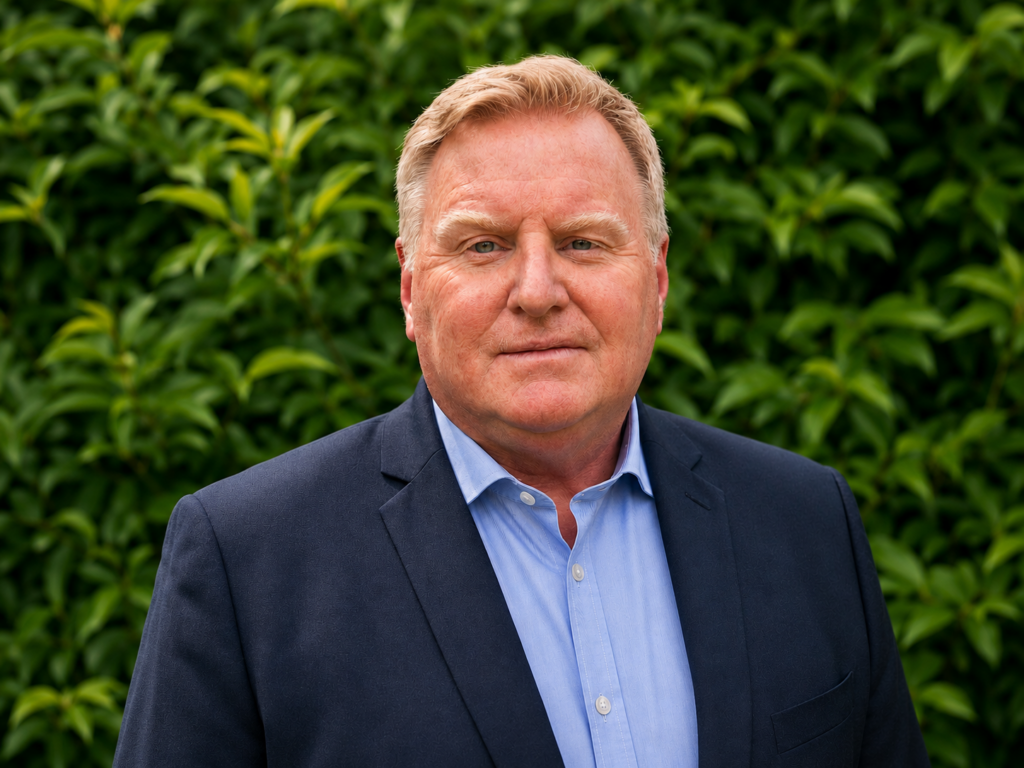
In his address to the council, Andy set out his direction for the new administration clearly and without equivocation. On the services that matter most, he was direct:
“Let me be direct about what we are here to do. This council must protect the services that matter most – adult social care, children’s services, SEND – they are not line items in a spreadsheet, they are the point of this council’s existence.”
— Andy Woolley, Leader’s address to East Sussex County Council
He was equally clear about the financial inheritance and what it demands from national government:
“The finances of this council require honest attention – and so does the question of what national government is prepared to acknowledge about the real cost of providing services in a county like ours. East Sussex has an ageing population, dispersed communities, and demands on social care and public health that the current funding formula consistently underweights. We will make that case clearly and we will not stop making it.”
— Andy Woolley
And on the approach to governing:
“Every resident of East Sussex – whatever they voted, wherever they live – has the same claim on this council’s attention, its effort, and its resources. That is the standard I am setting for this administration, and it is the standard by which I ask to be judged.”
— Andy Woolley
Andy was clear that the administration’s first steps would be deliberate rather than dramatic. The council will undertake a thorough review of its financial position, its major contracts, and its inherited commitments before announcing policy changes. The administration intends to be judged on what it delivers.
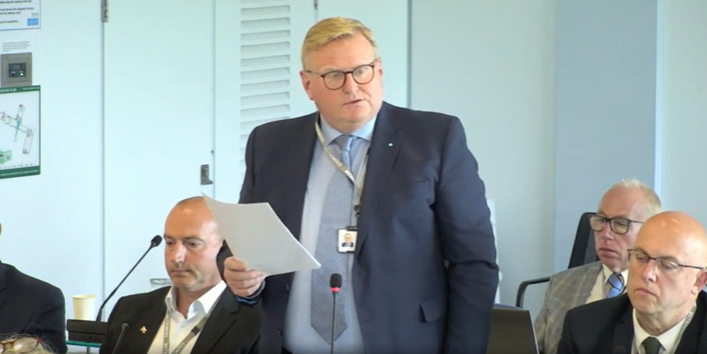
“I am grateful for the trust placed in me today. Residents across East Sussex have made clear what matters to them – better roads, honest management of their money, and a council that listens. I intend to repay that trust through action.”
— Andy Woolley
Pete Morley, who won Bexhill West with 1,647 votes and was elected the group’s Deputy Leader at the first Reform UK group meeting, has been confirmed as Deputy Leader of the Council. He holds the Economy portfolio, covering economic development, regeneration, culture, skills, and trading standards across East Sussex.
The appointment of Paul Soane as Lead Member for Education and SEND reflects the group’s direct commitment to one of the council’s most urgent challenges. Families across East Sussex have faced unacceptable delays in Education, Health and Care Plans and inadequate access to specialist provision. Peter Griffiths’ appointment as Lead Member for Transport and Environment places road improvement at Cabinet level, directly reflecting Andy Woolley’s address to the council.
“This Cabinet has been chosen for what its members know, where they come from, and what they are focused on delivering. But the success of this administration will not be measured only by what the Cabinet does – it will be measured by how every councillor in this chamber, regardless of party, can contribute to better outcomes for the residents who elected them. Good ideas are good ideas. That is the basis on which we intend to work.”
— Andy Woolley
Not everyone got the memo
The spirit of collaboration that Andy Woolley had worked to establish in the days before the AGM was not universally reciprocated. While some responses from other groups in the chamber were constructive, others chose a different path. Liberal Democrat councillor Sarah Osborne, representing Ouse Valley West and Downs, who said:
“Homogenous groups are prone to groupthink and an all-male leadership contradicts commitment to equality and inclusivity, which can lead to blind spots in policy.”
— Cllr Sarah Osborne, Liberal Democrats
The Green Party offered perhaps the most striking contrast between what was said inside the chamber and what was said outside it. Green group leader Cllr Julia Hilton addressed Andy Woolley directly during the meeting:
“As Greens we pride ourselves on collaboration, so where there is common ground and an ambition to be better we will happily contribute our knowledge and experience to the future shaping of services and hope that you will be open as an administration to working with all of us across the chamber in that endeavour.”
— Cllr Julia Hilton, Green Party group leader, speaking in the council chamber
It was a generous and constructive statement. It did not last long. No sooner had she left the chamber, Councillor Hilton issued a very different message to the press:
“Conservative Councillors have handed the county council to Reform on a plate. Vote Conservative. Get Reform. Their supporters will be furious. We are ready to form an administration together with our Lib Dem colleagues. We put this new administration on notice. When they fail, which they will, we will be ready.”
— Cllr Julia Hilton, Green Party group leader, in a statement to the press
Only a limited number of media outlets printed the statement. Everyone is entitled to their opinion, and political opposition is a healthy part of democracy. What is harder to understand is why Councillor Hilton chose to publicly predict failure before the administration had taken a single decision – or why the journalists who received the quote did not ask her how she knew the administration would fail, or why she was unwilling to extend the same collaborative spirit outside the chamber that she had offered within it.
The residents of East Sussex are watching. They did not elect their councillors to engage in the kind of political game-playing that has let this county down for years. Andy Woolley’s offer of collaboration across party lines remains open. What other groups choose to do with it is a matter for them and, ultimately, for the voters who will judge them.
A remarkable result for Bexhill and Battle
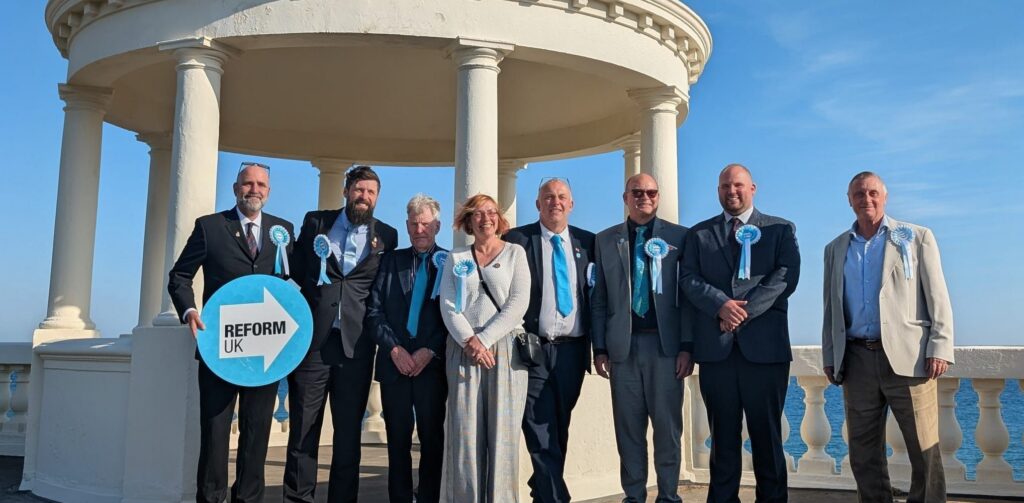
The AGM outcome was built on the foundation of the election results of 7 May. For Bexhill and Battle specifically, those results were remarkable. Reform UK won seven of the nine East Sussex County Council divisions across the branch’s wider area – including a clean sweep of all four Bexhill divisions, the first time any single party has achieved that in living memory.
Donald Walmsley won Bexhill North, Martin Kenward won Bexhill East, Victoria Carson won Bexhill South, and Pete Morley won Bexhill West. Those four victories, combined with results elsewhere across East Sussex, gave Reform UK the platform from which Thursday’s historic outcome was built.
That campaign was itself built on years of local work – including the branch’s successful challenge to Bexhill Town Council’s proposed 120 percent council tax precept rise, which forced a reversal and saved Bexhill residents more than £500,000.
What comes next
The administration has been formed. Now, as Victoria Carson put it in her message to branch members, the real work begins. One of the likely administration’s earliest priorities will be making the case to national government for a fairer funding settlement for East Sussex – a county with one of the highest proportions of older residents in England, whose care and service needs are consistently underweighted in the government’s funding formula. Andy Woolley is committed to working with MPs and councillors across all parties to make that case as forcefully as possible.
The administration also intends to build on the relationships Andy has already established with the leadership of Kent County Council, which has been led by Reform UK since May 2025. Those links offer practical value – particularly for residents living near the county border who use services from both councils – as well as the benefit of learning from a council that has navigated many of the same challenges East Sussex now faces.